Eiji Okada
11 titles
Filmography
11 results

Woman in the Dunes
(1964)Hiroshi Teshigahara's mystifying, serene and provocative fable about an entomologist who becomes trapped in a young widow’s desert shack.
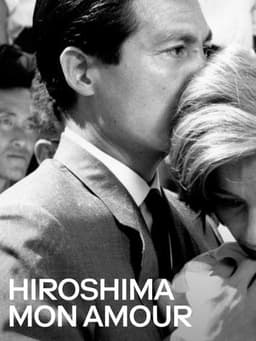
Hiroshima Mon Amour
(1959)Alain Resnais' 1959 groundbreaking first feature, Hiroshima Mon Amour, was a springboard for the French New Wave movement and its influence continues to this day. A French actress (Emmanuelle Riva) and a Japanese architect (Eiji Okada) engage in a brief, passionate affair in post-war Hiroshima. Their deeply intense connection brings out scarred but fading memories of love and suffering.

Assassination
(1964)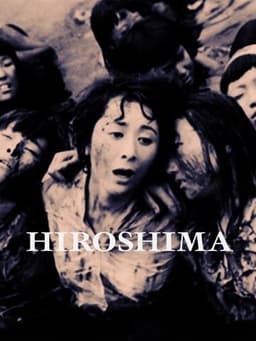
Hiroshima
(1953)Hiroshima (1953) is a powerful evocation of the devastation wrought by the world's first deployment of the atomic bomb and its aftermath, based on the written eye-witness accounts of its child survivors compiled by Dr. Arata Osada for the 1951 book Children Of The A Bomb: Testament Of The Boys And Girls Of Hiroshima. Adapted for the screen by independent director Hideo Sekigawa (Listen to the Voices of the Sea, Tokyo Untouchable) and screenwriter Yasutaro Yagi (Theatre of Life, Rice), Hiroshima combines a harrowing documentary realism with moving human drama, in a tale of the suffering, endurance and survival of a group of teachers, their students and their families. It boasts a rousing score composed by Akira Ifukube (Godzilla) and an all-star cast including Yumeji Tsukioka (Late Spring, The Eternal Breasts), Isuzu Yamada (Throne of Blood, Yojimbo) and Eiji Okada (Hiroshima Mon Amour, Woman in the Dunes), appearing alongside an estimated 90,000 residents from the city as extras, including many survivors from that fateful day on 6th August 1945. Hiroshima was produced and distributed outside of the studio system by the Japan Teachers' Union following the mixed critical reception to Children of Hiroshima (1952), directed by Kaneto Shindo the previous year, the first dramatic feature to deal directly with the atomic bombing. Although sequences from the film were used in Alain Resnais' classic of French New Wave cinema, Hiroshima Mon Amour (1959), it has been effectively out of circulation in Japan and the rest of the world since its original release in 1953 due to the force and political sensitivity of its message. This new High Definition presentation is the complete version, restoring the footage from the international edit that was released in the United States in 1955.

Silence
(1971)
Mother
(1952)
Zatoichi's Conspiracy
(1973)Everything comes full circle when Zatoichi returns to his hometown. Unfortunately, he finds that a childhood friend has become a feared crime lord, keeping the locals in debt and bilking them of their rice. Capping off Zatoichi’s feature film era before he made the transition to television in 1974, this chapter is suffused with melancholy, closing the series on a note of seriousness and emotional heft that it has well earned.

Magnitude 7.9
(1980)A seismologist warns that a massive earthquake will strike Tokyo, but no one believes him. All hell breaks loose when his prediction comes true.

The Face of Another
(1966)A staggering work of existential science fiction, THE FACE OF ANOTHER dissects identity with the sure hand of a surgeon. Okuyama (YOJIMBO’s Tatsuya Nakadai), after being burned and disfigured in an industrial accident and estranged from his family and friends, agrees to his psychiatrist’s radical experiment: a face transplant, created from the mold of a stranger. As Okuyama is thus further alienated from the world around him, he finds himself giving in to his darker temptations. With unforgettable imagery, Teshigahara’s film explores both the limits and freedom in acquiring a new persona, and questions the notion of individuality itself.
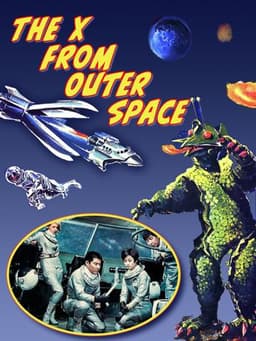
The X from Outer Space
(1967)When a crew of scientists returns from Mars with a sample of the space spores that contaminated their ship, the sample escapes and grows into an enormous, rampaging beaked beast.
